How did the instax Pal™ come about?
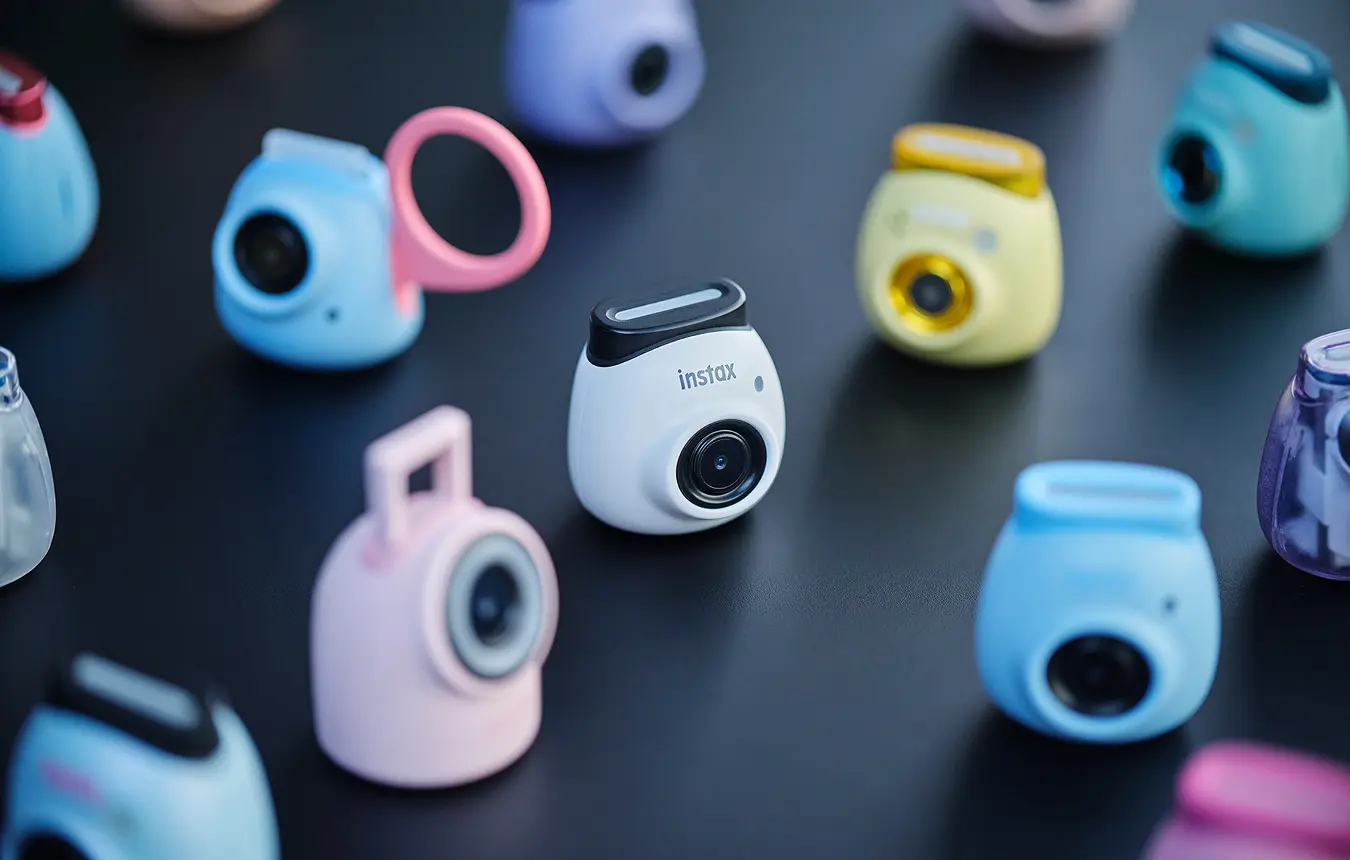
The instax Pal™ differs from typical instax™ creations in that it’s a tiny camera designed purely to take pictures. Taking photos and printing them on the spot was core to the experience of previous devices, but having a printer inside limited how small the designs could get. Development of the Pal started from the idea that, if we committed to removing the printing functions, we could create an extremely portable camera.
Of course, the obvious question becomes, “What makes it different from a smartphone camera, then?” Aiming to create a device that achieves something beyond the reach of smartphones and action cameras, I embarked on the design process by exploring what unique experiences and functions the instax Pal could provide.
What elements did you consider first when creating this totally new design?
My initial approach was to expand the concept of what cameras can look like and how they are used beyond anything that had come before. For example, I considered a block-based design that can be reassembled in various forms. But I realized that, rather than advanced functions or convenience, the best thing about instax™ is the way it fosters communication through the medium of taking and printing photos.
I saw that we could take that appeal to another level by making a camera that transcends being a mere device and feels almost like a living companion. This would also naturally inspire users to take photos in more situations. Consequently, we set a design direction based on the concept of a camera that accompanies people in a way smartphones can’t replicate.
Distilling the concept of a companion in camera form into the design sounds challenging.
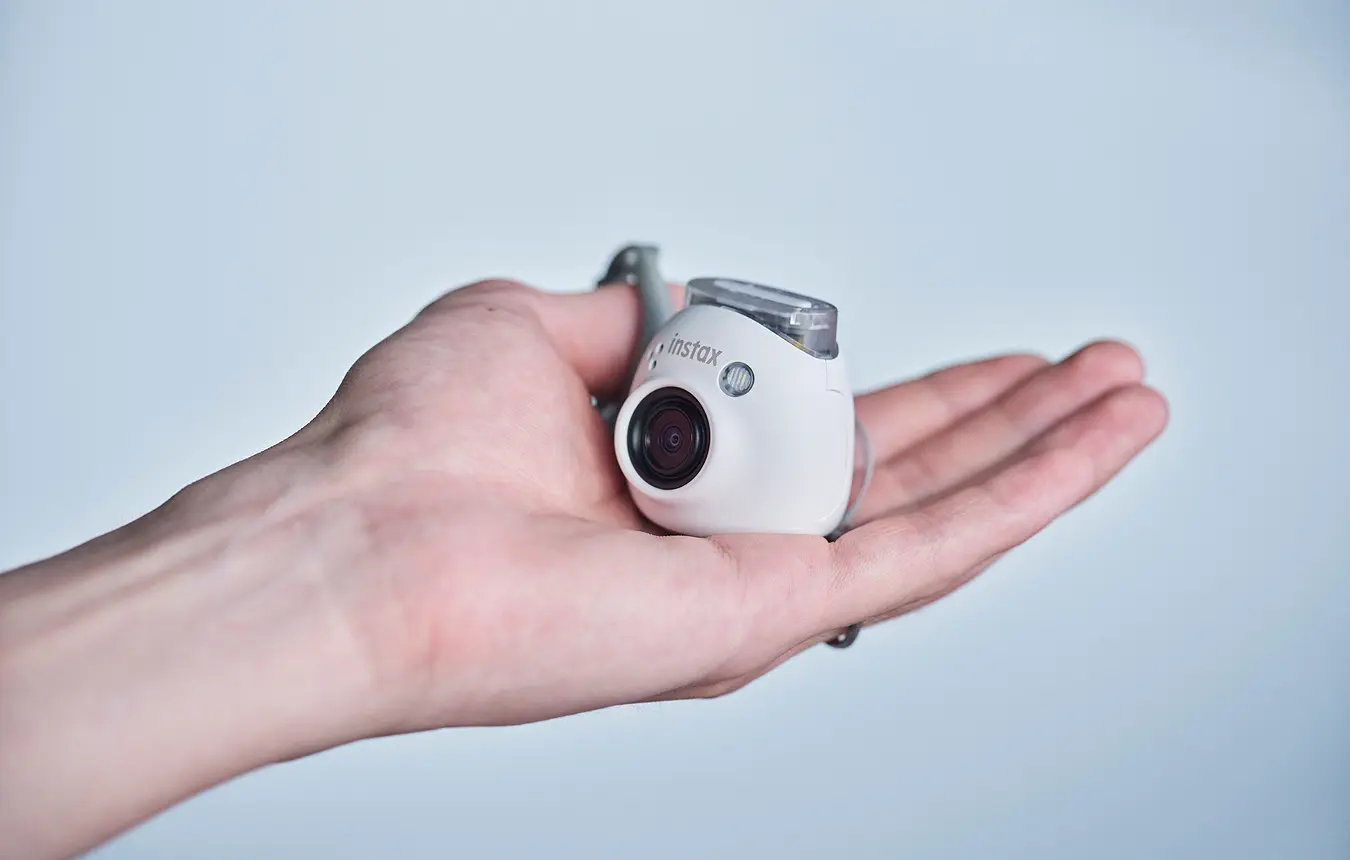
To embody that concept in the design, it was important to avoid inorganic shapes and create something that had the sense of a real living creature. Rather than a simple sphere, I aimed for a design that people would want to take everywhere, including a form that inspires a sense of affection to the touch and a plump tail-like protrusion for threading the strap through. We even designed the functional sounds to bring out character befitting a living creature. The startup sound is meant to be reminiscent of an animal blinking as it wakes up, while the power off sound evokes the idea of the Pal slumping down and going to sleep.
Was it like designing a completely new character?
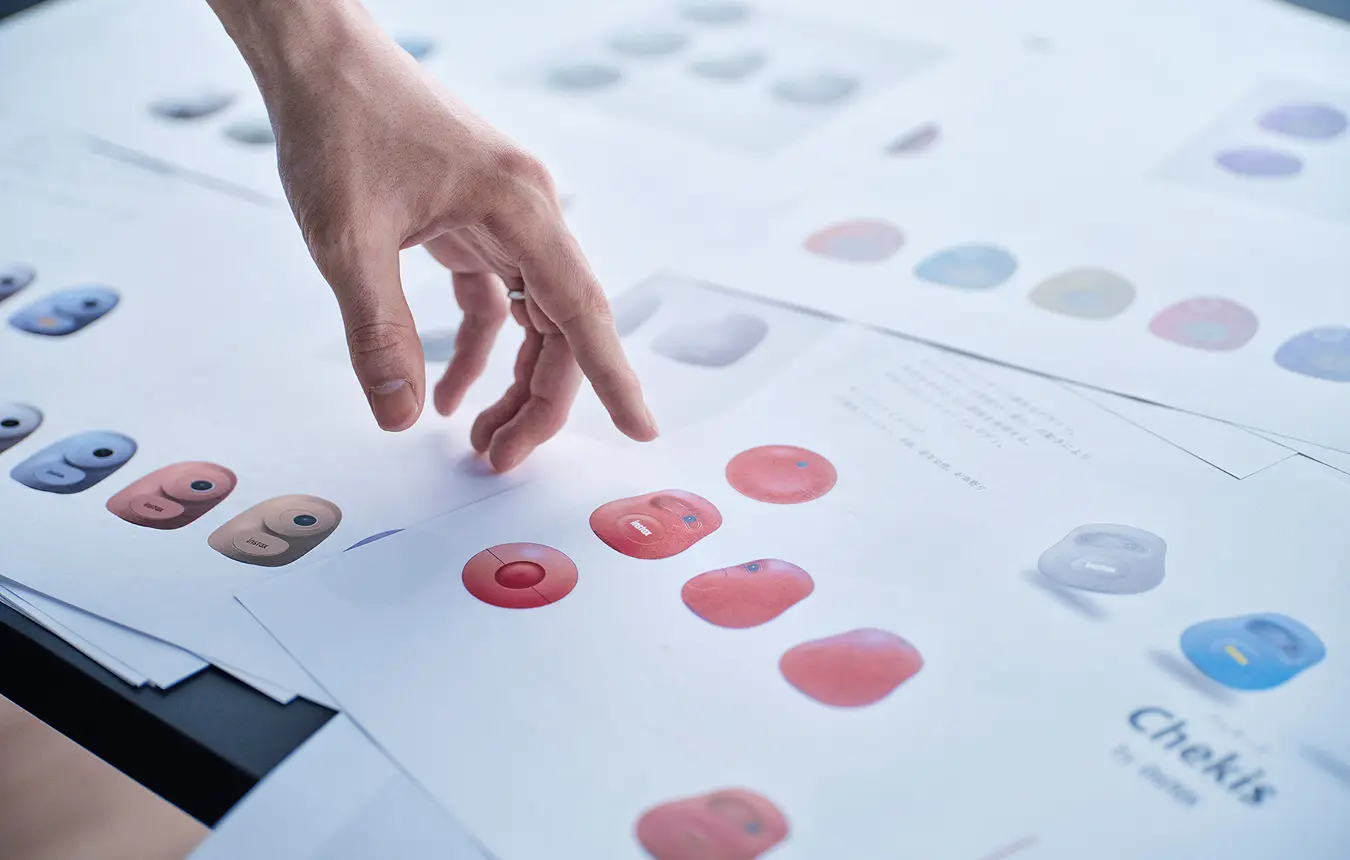
In the initial designs, I tried things like motifs based on daruma dolls and bringing out the “living thing” aspect with designs reminiscent of chibi-style characters or aliens. I also made some rough designs along the lines of creating a new character. But, rather than a complete blank slate, I wanted the design to embody the spirit of instax™ that Fujifilm has built up over the years. To that end, details in the final design took cues from features particular to instax™ cameras, such as print ejection slots and lens sections with eye-like expressiveness.
What part of the process did you find the most difficult?
The biggest challenge was combining a form reminiscent of a living creature with functionality as a camera. With the flash position, for example, if we prioritized the shape, the light from the flash was blocked and the photos came out too dark. We worked with the engineers to gather data that informed several rounds of adjustments in order to arrive at a charming shape that didn’t compromise on functionality.
We also carefully considered the sense of size. Making the Pal too small risked diminishing the joy of ownership and physical appeal, but if it was too big, it could end up feeling like a simple toy. Finding that perfect balance was difficult. I produced mockups in a 3D printer, then made millimeter-level adjustments to the overall size and how it feels in the hand. The way the lens sticks out has a particularly big impact on the expression, and I focused on creating a sense of physicality and smooth transitions between surfaces while maintaining a well-balanced design.
Once the Pal became a reality, it was a big hit with users. How did you go about moving the project forward and how did you work with those around you?
The Pal’s design was mainly the work of me as the main designer and my immediate manager. When I share progress on my design or put ideas forward to my manager, he always provides considered feedback. That was true for the Pal, but also applies to other projects. This time, we frequently discussed the vision for the Pal as an unprecedented product and the creation of a new photography experience.
My manager always responds to ideas and designs that I put forward by advising me on how I can adapt the expression to make it even more appealing. That approach has enabled me to move my designs forward freely and without restraint.
Producing a high-quality finished product is obviously a key expectation, but I also think that this is a workplace where designers can let their individuality shine.
What are common traits among the designers at Fujifilm?
A lot of people here are highly motivated by the desire to enjoy designing all kinds of things. Rather than being limited to a specific role or field of expertise, I’d say people who are willing to try anything and jump into new areas are well-suited to being designers at Fujifilm. I majored in product design, but I was also interested in other fields. I still am today. For someone who wants to do work that transcends subject areas and enjoy taking on new challenges, there’s no better place to be than Fujifilm.
- Original text by Tomoro Ando
- Photos by Sayuki Inoue
- English translation by Craig Murray