What is an endoscopy video processor?
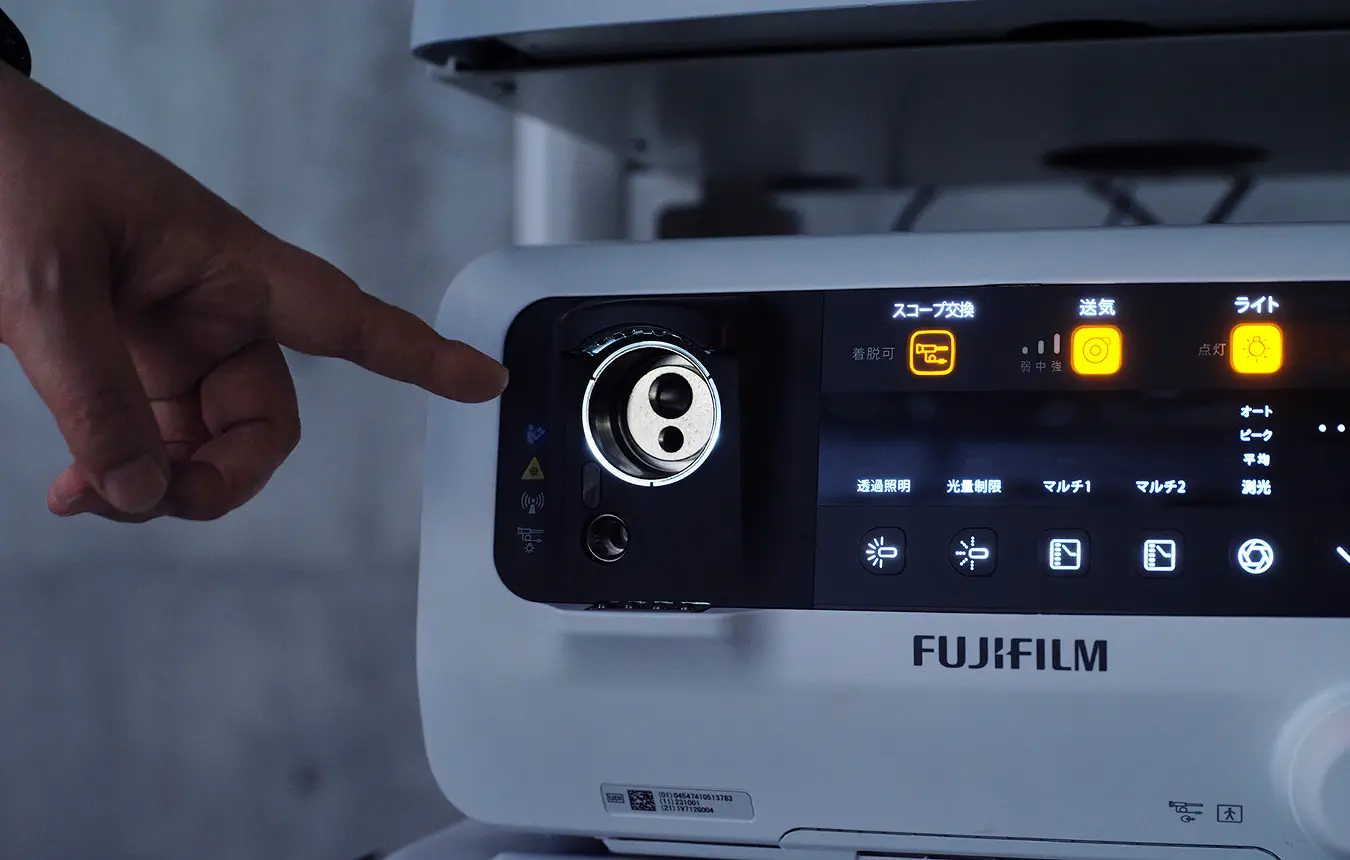
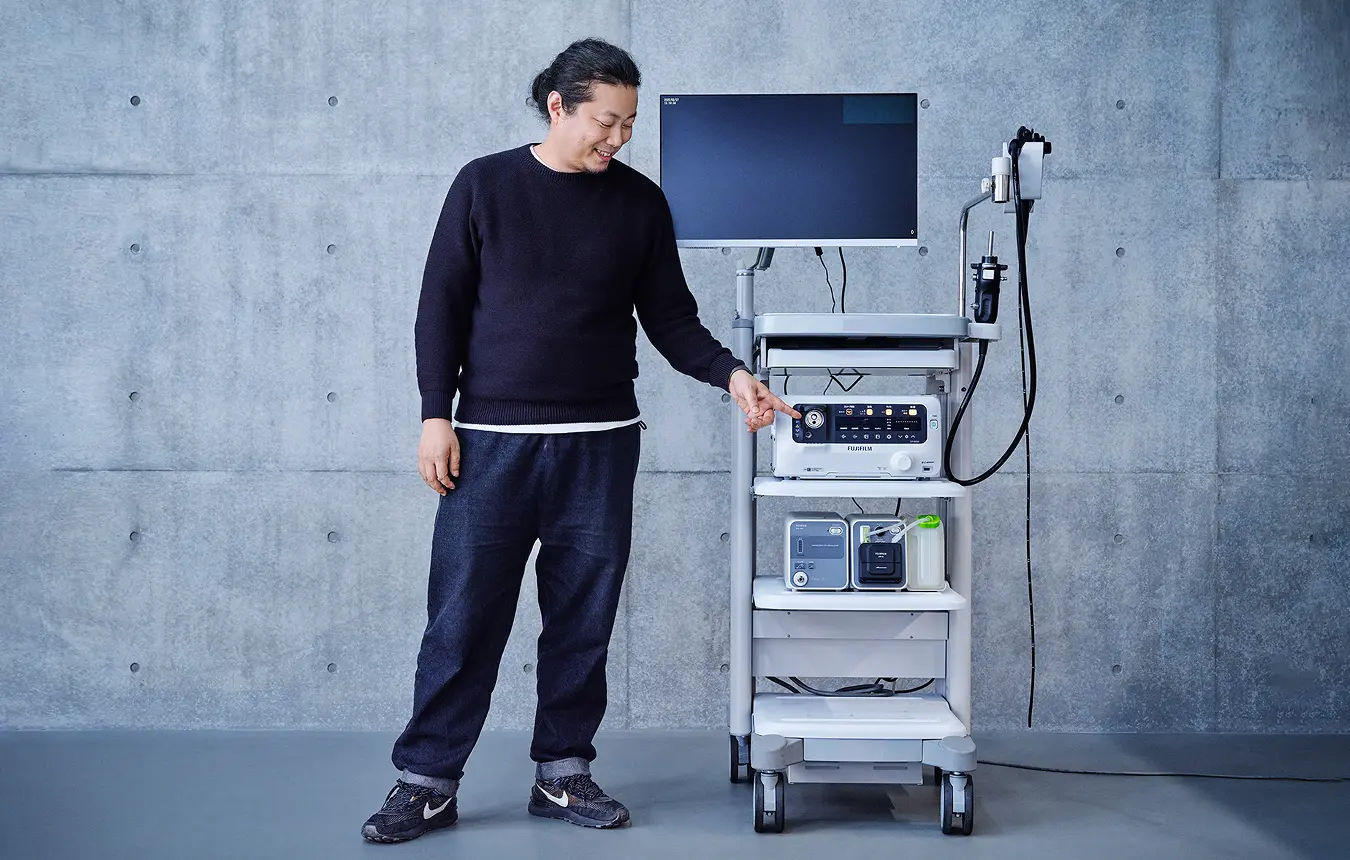
Video processors are the heart of endoscopy systems, which use extremely small cameras on the end of a scope to look inside areas such as the stomach or intestines. Processors take the input from the cameras and produce high-resolution images. The device that I designed is the flagship model in this product area.
What was it like designing a medical device for the first time?
Medical device design requires consideration of a unique range of factors. For example, it’s important that blood or any other contaminants that get onto the device are clearly visible. Cleanability is also important, staff have to be able to wipe away all dirt without leaving any behind, even if the device has grooves. The exterior design must also project reliability. When patients look at the equipment, they should feel peace of mind, confident in the knowledge that the device has the capabilities to provide effective examination. Medical facilities also use various devices in combination with each other, so individuality is important in order to avoid becoming part of a crowd.
In consideration of those factors, what elements of the design did you focus on?
Three elements were particularly important. First was making the brand stand out more than before while retaining commonality with previous products in terms of appearance and operability. Endoscopy systems have a lot of peripherals, so unity as a product group is also key.
The second crucial element was creating an appearance befitting a flagship model with advanced functions. Third, I wanted the design to express intelligence in way that communicates how advanced the technology is. Character that makes people think “that looks capable” the moment they see the device is a key feature of Fujifilm’s product design.
Does that apply to all kinds of products?
It’s particularly noticeable in our medical products. I started the process of designing a medical device by looking at what sets our designs apart from the competition. Through that comparison, I noticed that the contrast between black and white, and the division of coloring creates an appearance conveying clear intelligence. I wanted to refine that aspect even further with the model I designed.
How did you distill presence befitting a flagship product into the design?
“Dignified” is a word that we often use here at the Design Center. I wanted the design to look dignified and feel like it was standing tall, exuding unwavering strength. I sought to bring this out through the zoned, symmetrical design combining a white base with a black operation section.
Was there anything that you struggled with on the way to creating the final design?
If I had to pick, I’d say that, because the product was being developed during the pandemic, it was difficult to unify the wills of everyone involved. Many concepts are difficult to share effectively through verbal discussions alone, so we produced a number of mockups to bring the direction together. That’s one of a designer’s roles—to visualize ideas.
Have you always created a lot of mockups?
Yes, but that’s not exactly unusual at our studio. Everyone here loves making things, and the managers encourage us to try building various prototypes. Rather than talking based on mental images alone, soliciting opinions by showing people something in physical form increases the density and accuracy of communication. We see that as an important part of the culture here.
Driving quick decision making and ensuring that the design direction doesn’t deviate are marks of a good designer, aren’t they?
Designers need the ability to consider factors such as engineering requirements in order to avoid design direction deviations after decisions have been made. One thing you never want to hear is, “we had a great mockup when we finalized the design direction, but once we accommodated all of the engineering requirements, it came out a bit plain.” On the contrary, we want people to say, “it keeps getting better and better.”
Do you have any tricks for staying true to the original concept as the design becomes more detailed?
Start by embracing constraints when they emerge. Rather than jumping to negative conclusions, I try to make limitations into a positive. If that doesn’t work out, then I think of and suggest potential solutions myself. By repeating this process several times, the design gradually becomes more detailed.
We heard that you also went on site visits to Europe during development.
I went right before the product launch, so rather than preparation for development, it was more like a review process. I travelled around medical facilities in Europe to get a clearer idea of the extent to which our approach with this flagship model matched actual needs and circumstances on the ground.
Ideally, we would generally do that during the initial development stages, but that wasn’t feasible due to factors such as the pandemic. As a result, I was apprehensive about some elements, so I wanted to go and see where the product will be used for myself, even if the design work was already finished.
What did you learn from your site visits to medical facilities?
First of all, I was relieved to see that our design aims matched their needs. I also found inspiration for new potential ideas to take things further. I hope to implement those innovations when designing subsequent models.
Isn’t it tough to constantly come up with new designs?
Things are OK so far, there’s still plenty of room for growth.
Do you mean growth in terms of product performance?
I mean both in terms of product capabilities and my own skills. My experience designing medical devices is still relatively short, so every new experience teaches me something. I think having so much that I don’t know helps me to develop. I’m always telling my manager that my growth never stops!
What do you think is important to consider when designing medical devices?
I’m constantly aware of the high importance of making something beautiful. The world is full of high-performance, cost-effective products, but there are very few that reach the level of tangible beauty. Technology alone is not enough to reach those heights.
I’ve been told on many occasions that, at the end of the day, customers make purchase decisions based on specs, so there’s no need to worry about the design. Those people may have a point, but to reach the top of an industry, you need to satisfy customers in terms of both performance and aesthetics. A beautifully put-together product is one in which attention has also been paid to the aesthetics, which in turn means that meticulous consideration has been given to functionality and operability.
The medical world is constantly changing, including the ways in which people work and act. It’s not a field where you can use information from three years ago. That’s one reason why it’s important to go on site as much as possible, to see the present situation and consider the future. By creating ever-better medical devices through this process, I hope to make even a small contribution to helping more people to appreciate Fujifilm.
- Original text by Masahiro Kamijo
- Photos by Sayuki Inoue
- English translation by Craig Murray